Please join our Water Industry Team on April 16, 2020 for “Keeping Current on COVID-19 Challenges for the Water Industry,” a special presentation as part of our 2020 Water Webinar Series.
There is no question that the COVID-19 pandemic has significantly disrupted business operations in virtually every business sector, and the water industry is no exception. We are mindful of how strenuous it is for our clients to navigate these turbulent times as they continue to provide critical services to our communities and adapt quickly to new emergency orders ...

There is no question that the COVID-19 pandemic has significantly disrupted business operations in virtually every business sector, and the water industry is no exception. We are mindful of how strenuous it is for our clients to navigate these turbulent times as they continue to provide critical services to our communities and adapt quickly to new emergency orders.
We have received a number of questions and concerns from clients on how the current pandemic affects the water industry, and what to expect going forward. We will be hosting a webinar on April 16, 2020 from 1:00 to 2:00 p.m. PT to address some of the latest updates on these issues and to help answer questions. Please click here to register.
In the meantime, the following summarizes some of the key issues facing water industry professionals, which we will address also in more detail during the webinar ...
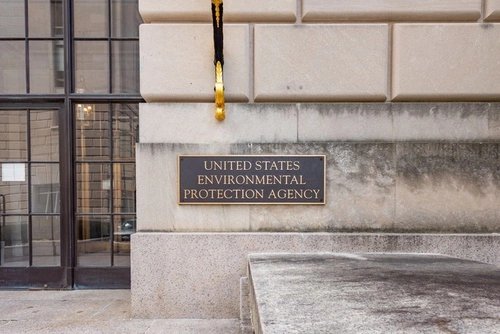
On March 26, 2020, EPA announced a temporary enforcement discretion policy to excuse violations of environmental laws in specified circumstances during the coronavirus pandemic. EPA has stated that as of Friday, April 3, it has not issued any waivers for "essential critical infrastructure" that cannot comply with environmental enforcement during the novel coronavirus pandemic. More information on what could be considered “critical infrastructure” during the pandemic is available here. Nossaman continues to follow developments regarding EPA’s ...

On March 12, 2020, Jeffrey Bossert Clark, the Assistant Attorney General in charge of the Environment & Natural Resources Division of the U.S. Department of Justice (“DOJ-ENRD”) issued a policy memorandum formally ending the use of Supplemental Environmental Projects (“SEPs”) in civil settlement agreements negotiated by DOJ-ENRD. SEPs are an enforcement mechanism that have been used by EPA and DOJ-ENRD to allow settling parties to agree to perform environmentally beneficial projects in exchange for lowered or even waived monetary penalties. Typically, SEPs are ...

The California State Water Resources Control Board (“State Water Board”) recently issued a draft Definition of Microplastics in Drinking Water and an accompanying staff report. The State Water Board will host a video/teleconference workshop on the draft definition on April 7, 2020 and written comments will be accepted until April 24, 2020. Here is the draft definition ...
World Water Day is an annual United Nations international observance day that highlights the importance of freshwater. The U.N. chooses a theme for the day each year, and for 2020 the theme is “Water and Climate Change." The goal of World Water Day is to inspire people around the world to learn more about water-related issues and to take action to make a difference. In 2020, in response to the COVID-19 pandemic, there was an additional focus on hand washing and hygiene. World Water Day is celebrated around the world through political, artistic, and educational events, as well as ...

Yesterday, the Environmental Protection Agency (EPA) released guidance on the coronavirus and the U.S. drinking and wastewater systems. According to the EPA, “Based on current evidence, the risk to water supplies is low. Americans can continue to use and drink water from their tap as usual.” The EPA also continues coordinating with federal partners ...

On February 6, 2020, the California State Water Resources Control Board lowered the response levels (RLs) for perflourooctanoic acid (PFOA) and perfluorooctanesulfonic acid (PFOS), two of the most common compounds in the family of chemicals known as per- and poly-fluoroalkyl substances (PFAS). The new RLs are set at 10 parts per trillion (ppt) for PFOA and 40 ppt for PFOS, down from the previous RL of 70 ppt for the combined concentration of the two compounds.
This Board action follows the new regulatory requirements in California for PFAS that became effective on January 1, 2020 ...
California Water Views provides timely and insightful updates on the water sector in the state. We relay information on how water legislation and policy from the nation’s capital, Sacramento, and around the U.S. affect California’s water utilities, agencies, practitioners, and consumers. We also write about important events, conferences, legal cases, and other key happenings involving all things water in and around California.
Stay Connected
 RSS Feed
Categories
- Artificial Intelligence
- Bonds
- California Regulation & Policy
- California Water Policy
- California Water Views 2026 Outlook
- Clean Up of Groundwater & Contaminated Media
- Clean Water Act
- Climate Change
- Climate Change Adaptation
- Coastal Development
- Construction
- Courts
- COVID-19
- Dam Construction, Operation & Removal
- Desalination
- Drinking Water Quality & Safety
- Environmental Compliance
- Environmental Law
- Environmental Protection Agency
- Events
- Government Administration
- Government Funding
- Groundwater Management & SGMA
- Infrastructure & Capital Planning
- Infrastructure Development
- Inverse Condemnation & Regulatory Takings
- Legislative Updates
- New Legislation
- Oceans, Marine Life & Maritime Transportation
- Permitting and Project Development
- Project Construction
- Projects
- Public Agency Regulation
- Public Policy
- Recycled Water
- Regulatory Reform & Proposed Rules
- Right to Take
- State Budgets
- Sustainable Water Practices
- Valuation
- Water
- Water Affordability
- Water Infrastructure
- Water Litigation
- Water Management
- Water Quality
- Water Resources Law
- Water Rights
- Water Supply
- Water Utility Regulation
- WOTUS
