
A new California Court of Appeal decision – Department of Water Resources Cases (March 26, 2026) --- Cal.Rptr.3d ----, 2026 WL 835863 (Case No. C103207) – provides important clarity for water agencies planning major infrastructure projects. The ruling confirms that agencies with eminent domain authority may temporarily access private property to conduct environmental and technical studies before a project is fully approved or funded.
For water agencies tasked with long‑term planning amid uncertainty, the decision reinforces a practical and legally sound foundation for early‑stage project development.
The Issue: Studying Before Deciding
Large‑scale water projects often require years of analysis before agencies can properly evaluate whether they should move forward. That analysis often depends on access to land for:
- Environmental and biological surveys
- Geological and geotechnical testing
- Cultural and historical resource evaluations
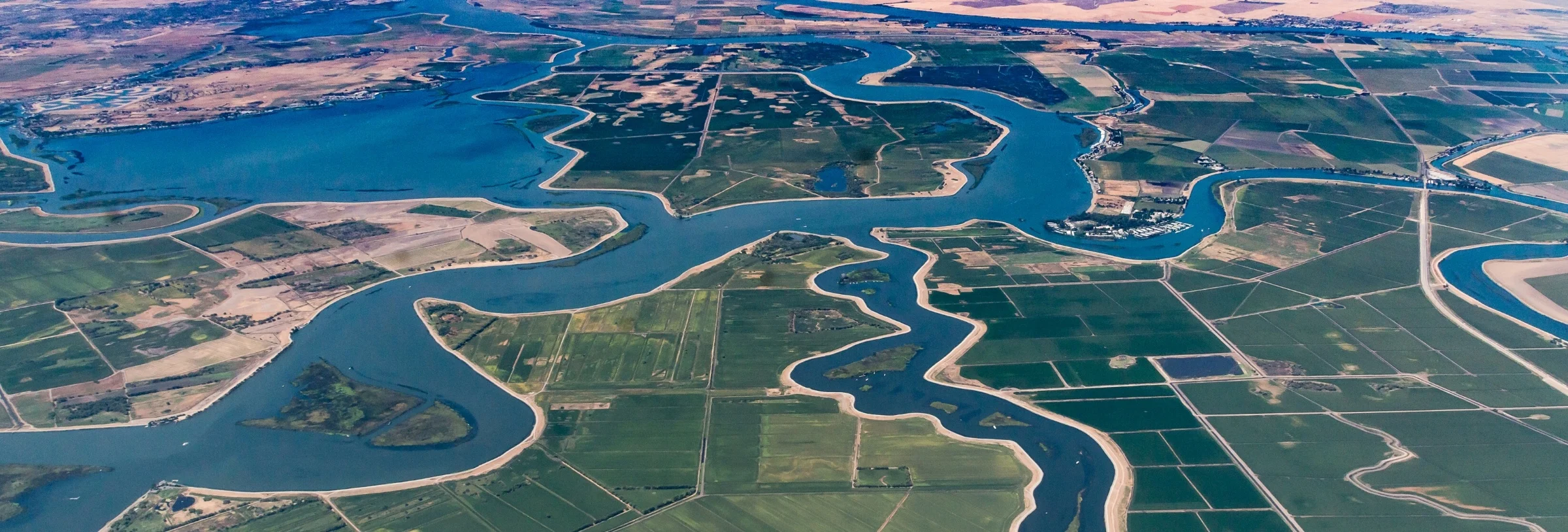
In this part of the Department of Water Resources Cases, the California Department of Water Resources (DWR) sought court approval to temporarily enter private properties in the Sacramento‑San Joaquin Delta for investigatory purposes in connection with the proposed Delta Conveyance Project. DWR relied upon the pre-condemnation entry statutes for this request.
Property owners challenged the entries, arguing that DWR could not undertake these activities unless the project had already received full approval and secured funding.
The Court’s Ruling
The Court of Appeal rejected those arguments and upheld the trial court’s order allowing DWR’s entries.
The court emphasized a long‑recognized distinction in California law:
- Eminent domain (condemnation) applies when an agency seeks to permanently acquire property.
- Pre‑condemnation entry applies when an agency temporarily accesses property to study its suitability for a potential project.
The court confirmed that project approval and funding requirements for DWR apply only to actual property acquisition—not to pre‑project studies. As long as an agency has authority to acquire property for public use, it may conduct reasonable pre‑condemnation investigations to inform planning decisions.
Importantly, the court noted that requiring full approval and funding before conducting studies would undermine responsible public planning and effectively eliminate the purpose of California’s pre‑condemnation statutes.
Consistent with California Supreme Court Precedent
The decision builds directly on Property Reserve, Inc. v. Superior Court (2016) 1 Cal.5th 151, a 2016 California Supreme Court ruling arising from the same litigation. That decision made clear that:
- Pre‑condemnation entry statutes are separate from condemnation laws
- Agencies may gather information before deciding whether to proceed
By reaffirming this precedent, the Court of Appeal reinforced long‑standing legal principles and rejected efforts to blur the line between early planning and property acquisition.
Why This Matters for Water Agencies
This decision has practical implications for water agencies throughout California:
Enables Responsible Long‑Term Planning
Agencies can continue conducting feasibility studies and environmental review before committing public funds or advancing a project for approval.
Reduces Legal and Programmatic Risk
Clear confirmation of pre‑entry authority provides stronger footing when agencies seek access for studies and helps reduce uncertainty and litigation risk at the earliest project stages.
Supports Comprehensive Environmental Review
Early access allows agencies to identify sensitive resources, refine project alternatives, or determine that a project should not proceed before approvals are sought.
The Takeaway for Water Agencies
The Court of Appeal continued building on Property Reserve, Inc. by drawing a clear line between pre-condemnation entry and “classic” eminent domain.
For water agencies navigating complex regulatory, environmental, and fiscal challenges, the decision reinforces a critical principle: early investigation is not only practical, it is legally protected and essential to responsible governance.

 Associate
Alex Van Roekel provides counsel to clients on state and federal water law issues, including compliance with statutory and regulatory requirements, litigation strategy in both state and federal court and public policy within the ...
California Water Views provides timely and insightful updates on the water sector in the state. We relay information on how water legislation and policy from the nation’s capital, Sacramento, and around the U.S. affect California’s water utilities, agencies, practitioners, and consumers. We also write about important events, conferences, legal cases, and other key happenings involving all things water in and around California.
Stay Connected
 RSS Feed
Categories
- Artificial Intelligence
- Bonds
- California Regulation & Policy
- California Water Policy
- California Water Views 2026 Outlook
- Clean Up of Groundwater & Contaminated Media
- Clean Water Act
- Climate Change
- Climate Change Adaptation
- Coastal Development
- Construction
- Courts
- COVID-19
- Dam Construction, Operation & Removal
- Desalination
- Drinking Water Quality & Safety
- Environmental Compliance
- Environmental Law
- Environmental Protection Agency
- Events
- Government Administration
- Government Funding
- Groundwater Management & SGMA
- Infrastructure & Capital Planning
- Infrastructure Development
- Inverse Condemnation & Regulatory Takings
- Legislative Updates
- New Legislation
- Oceans, Marine Life & Maritime Transportation
- Permitting and Project Development
- Project Construction
- Projects
- Public Agency Regulation
- Public Policy
- Recycled Water
- Regulatory Reform & Proposed Rules
- Right to Take
- State Budgets
- Sustainable Water Practices
- Valuation
- Water
- Water Affordability
- Water Infrastructure
- Water Litigation
- Water Management
- Water Quality
- Water Resources Law
- Water Rights
- Water Supply
- Water Utility Regulation
- WOTUS
