
Earlier this month, the Department of Water Resources (DWR) released the draft California’s Groundwater – Update 2020. According to DWR’s website:
“This version of California’s Groundwater provides a comprehensive look at statewide groundwater activities, compiling technical information and data from 2003 to 2020. This bulletin recognizes the historic passage of the Sustainable Groundwater Management Act (SGMA) in 2014 and builds a statewide framework to share new information and progress made by locals who are managing groundwater basins across the state. It ...

With a wide patchwork of water systems servicing residents across California, there have been ongoing efforts by the Legislature to encourage the consolidation of smaller water systems to take advantage of scale economies and improve system reliability and compliance with drinking water standards.
To gain insight into the evolving landscape as these changes are being implemented, please join us on March 23, 2021 from 11:00 a.m. – 12:15 p.m. PT for a complimentary webinar, “Taking the Plunge: Lessons Learned from Water System Consolidations.” Also joining our Nossaman ...
As of December 7, 2020, water has been included as a traded commodity on the Chicago Mercantile Exchange (“the Merc”). According to a recent Chicago magazine article, “Now cities and farmers can buy futures in California’s water, meaning they can hedge against (or bet on) rising water prices out west, based on the Nasdaq Veles California Water Index [ticker symbol: NQH2O], which tracks the current market price of the five largest water supplies in the state…So far, only the Golden State’s water supply is being traded; it’s sort of a test run.”
Some see this move at the ...

Following up on our December 2020 post regarding the SolarWinds cybersecurity breach, we wanted to provide a link to the February 11, 2021 joint Cybersecurity Advisory issued by the federal government. The Advisory—jointly authored by the FBI, U.S. Environmental Protection Agency, U.S. Cybersecurity & Infrastructure Agency and the Multi-State Information & Analysis Center, part of the nonprofit Center for Internet Security—comes on the heels of a cyberattack on the Oldsmar, Florida water treatment plant. On February 5th, a hacker gained access to the plant and increased ...

Congratulations to Water Law Group Associate Willis Hon who completed the Water Education Foundation’s Water Leaders program at the end of 2020. Members of the 2020 Water Leaders class examined how to adapt water management to climate change. Read their policy recommendations in the class report, Adapting California Water Management to Climate Change: Charting a Path Forward, to learn more.
The William R. Gianelli Water Leaders Class is California’s premiere water leadership program aimed at early to mid-career, up-and-coming community leaders from diverse backgrounds ...
In light of the major cybersecurity breach of the SolarWinds Orion software by malicious actors, the Water Information Sharing and Analysis Center (WaterISAC) recently issued a series of advisories providing guidance for water providers across the country on how to respond and react to this unprecedented cyberattack.
As highlighted in the WaterISAC advisory issued on December 16, 2020, the Environmental Protection Agency has recommended that all water and wastewater utilities review the Cybersecurity and Infrastructure Security Agency's (CISA's) Emergency Directive ...

If you were unable to attend our recent webinar “Flood or Drought? A Discussion of the Election’s Potential Legislative Impacts on the Water Sector”, please check out the recording of the on-demand webinar, which can be accessed here. Additionally, we invite you to download the presentation slide deck here.
Several key take-aways from the presentation included:
- Consensus among the water industry, and a proactive approach, will help advance legislative goals under tight timeline pressures.
- The State Resources Water Control Board is currently gathering information about ...
We recently authored the article, “Power Shutoffs: What California Water Providers Should Know” (subscription required) for the Daily Journal, California’s leading daily legal news source.
The article examines how water systems—which rely heavily on electricity to pump, treat and deliver safe drinking water to customers—have been impacted as catastrophic wildfires in California have led to an increased use of public safety power shutoff (PSPS) as a means for electric utilities to mitigate the risk ...
President-elect Joe Biden’s victory over Donald Trump could mean big changes for federal treatment of issues affecting water service providers, as well as how such issues are addressed in California, where Governor Newsom will presumably now have an ally in the White House. At both the state and federal levels, legislators are still working to address the impact of COVID-19 on public health and the economy, while pursuing existing policy goals that may have been put on hold due to the challenges created by the pandemic.
To navigate these new changes, please join us on December 3, 2020 ...

Community Water Systems (CWSs) around the country should be aware of upcoming deadlines at the end of 2020 that were put into place under the America’s Water Infrastructure Act (AWIA) previously signed into law in 2018. The law requires CWSs that serve more than 3,300 people to complete a risk and resilience assessment and develop an emergency response plan and establishes deadlines by which water systems must certify to the United States Environmental Protection Agency (EPA) completion of the risk assessment and emergency response plan.
For those CWSs serving ≥100,000 ...

On October 13, 2020, President Trump issued the Executive Order (EO) on Modernizing America’s Water Resource Management and Water Infrastructure. The goal of the EO is to streamline the management of federal water policy and make coordination among agencies managing water infrastructure more efficient. The EO established a Water Subcabinet of agency officials to coordinate water strategy and planning. The composition of the Water Subcabinet is outlined in the EO, and according to a press release from the Environmental Protection Agency (EPA) ...
California’s fourth annual Water Professionals Appreciation Week kicks off on October 3rd, highlighting the important role of water industry professionals and local public water agencies in ensuring safe and reliable water, wastewater and recycled water operations in California. Now more than ever, we appreciate the dedication of our highly trained operators, technicians and other specialists in the water sector.
Water Professionals Appreciation Week was established in 2017 by Senate Concurrent Resolution 80, by Sen. Bill Dodd (D-Napa). Recent labor studies estimate ...
Nossaman is a proud supporter of the American Water Works Association's Water For People Virtual Gala & Auction. The event will be held on Thursday, October 1, 2020 at 5:30 p.m. PT. Virtual doors open at 5:00 p.m. PT. In partnership with Pacific Auction Company, the Water for People California Committees are excited to hold their first Virtual Gala & Auction. You can RSVP for the event here.
The live auction will feature fabulous local getaways, specialty wine, and other great surprises! Attendance is free, though you must register to participate! Breakout afterparty rooms will follow the gala event. There is also a Silent Auction open from September 25 to October 1. Net proceeds of this event benefit Water For People’s mission in promoting the development of high-quality drinking water and sanitation services, accessible to all. Water for People is a 501(c)(3) organization. For additional information please visit waterforpeople.org.

Nossaman recently presented the webinar "WOTS Next? An Update on the Clean Water Act and Regulation of Waters of the State & Waters of the U.S." To hear some of the key points which I discussed concerning current WOTS permitting requirements, please click here for the overview of that topic from the webinar.
If you were not able to attend the full live session, we invite you to watch the on-demand webinar at your convenience. During this presentation, you will learn about:
- The current status of the Navigable Waters Protection Rule;
- The current status of the new federal Clean Water Act ...

Governor Gavin Newsom recently released the final version of the Water Resilience Portfolio, which identifies 142 specific state actions to be taken in order to help build a climate-resilient water system for California in the face of climate change. The Water Resilience Portfolio is meant to serve as the Newsom Administration’s blueprint for helping the State adapt to impacts of climate change on its water, including more extreme droughts and floods, rising temperatures, declining fish populations, over-reliance on groundwater and other challenges.
In April 2019, Governor ...

Please join me as I moderate “PFAS: Updates on the Regulatory Landscape” on July 29th, from 10:30 - 11:30 a.m. PT, during the 2020 Summer Virtual Conference, hosted by the Association of California Water Agencies (ACWA).
Participants will come away from this session with important information about...

Please join us along with our guest panelist, Thienan Pfeiffer, President & CEO of Glenn Lukos Associates, from 1:00 – 2:15 p.m. PT on July 16, 2020 for a timely webinar: "WOTS Next? An Update on the Clean Water Act and Regulation of Waters of the State & Waters of the U.S."
In the ever-shifting landscape of the Clean Water Act and Porter-Cologne jurisdiction, it can be difficult to determine whether you are engaging in activities that result in discharges of dredge, fill or pollutants to a Water of the United States (WOTUS) or Water of the State (WOTS), triggering regulatory permitting ...

This week, on June 16, the California State Water Resources Control Board (“State Water Board”) unanimously adopted a definition for microplastics, making California the first state to adopt a definition specifically applied to drinking water (footnotes omitted):
‘Microplastics in Drinking Water’ are defined as solid polymeric materials to which chemical additives or other substances may have been added, which are particles which have at least three dimensions that are greater than 1nm and less than 5,000 micrometers (µm). Polymers that are derived in nature that have not been chemically modified (other than by hydrolysis) are excluded.
The final definition is much the same as the proposed version that was issued in March 2020 for public comment, key differences being that ...

The California Public Utilities Commission (CPUC) recently took action in two proceedings addressing issues related to low-income customer assistance and affordability. The CPUC noted that the importance of these proceedings has been magnified due to the economic conditions created by the COVID-19 pandemic.
First, on June 3, 2020, the CPUC issued an amended scoping memo in Rulemaking 17-06-024 requesting comments to consider potential CPUC response to the COVID-19 pandemic. This would be the second phase of this rulemaking proceeding, which was initiated to evaluate the ...

For those of you involved in the transportation sector, we invite you to join us on Wednesday, June 3rd for a discussion on planning, procurement and financing strategies that can be implemented now to support timely project delivery in the wake of the COVID-19 pandemic. We are planning a very interactive webinar where ample time will be set aside to answer questions received from attendees both prior to and during the event.
Topics that will be covered include:
- How to prepare now to efficiently and effectively move projects forward
- Procurement and contracting strategies that enable ...
Recently, I participated in the Environmental Law Institute’s (ELI) Master Class, PFAS: From Common Use to Concern. My fellow panelists and I discussed “PFAS in Water,” which included a discussion of the environmental and human health impacts of PFAS contaminated waters, as well as the best approaches to regulate, establish and enforce cleanups and safe drinking water standards. I was privileged to serve on this panel along with Chris Curran, Water Business Line PFAS Lead, AECOM; Rula Deeb, Ph.D., Senior Principal, Geosyntec Consultants; and Jonathan Kalmuss-Katz, Staff Attorney, Earthjustice. Some of the main take-aways from our presentation included ...

Please join me on May 5, 2020, when I will participate in a webinar panel discussion, "PFAS in Water," hosted by the Environmental Law Institute (ELI). As the second presentation during the ELI Master Class, PFAS: From Common Use to Concern, our panel will dive into the environmental and human health impacts of PFAS contaminated waters. We will also tackle the best approaches to regulate, establish and enforce cleanups and safe drinking water standards. Additionally, our group of experienced water sector practitioners will explore the federal and regional regulatory ...

Last week, the U.S. Supreme Court issued a long-awaited decision in County of Maui v. Hawaii Wildlife Fund et al., 590 U.S. __ (2020), in which it determined that the Clean Water Act (CWA) requirements for a National Pollutant Discharge Elimination System (NPDES) permit for point source discharges of pollutants do apply in certain circumstances to effluent that reaches waters of the United States via groundwater. But under what circumstances? Plaintiff environmental groups argued for the Ninth Circuit’s decision that CWA permitting requirements apply when effluent in a ...

In the ongoing saga of the Clean Water Act’s so-called “Waters of the United States” or WOTUS rule, the U.S. Environmental Protection Agency (EPA) and the Army Corps of Engineers (ACOE) announced changes to the definition of “Navigable Waterways” on January 23, 2020. Those changes were published in the Federal Register on April 21, 2020. The EPA and ACOE share jurisdiction for administering the Clean Water Act and are collectively responsible for adopting regulations for implementing the Clean Water Act. The change to the definition of Navigable Waters is the latest move ...

On March 23, 2020, Governor Newsom signed Executive Order N-54-20, suspending for 60 days public agency and project proponent procedures for posting notices of key CEQA compliance actions. The Executive Order also relaxes statutory tribal consultation requirements.
The Executive Order is effective immediately and applies to ...

As California businesses remain closed and residents stay at home under shelter-in-place orders, water utilities are at the frontlines ensuring continued access to safe drinking water. Still, it seems that no industry is immune to COVID-19’s economic impacts. A recent analysis prepared for the American Water Works Association and the Association of Metropolitan Water Agencies estimates that revenue shortfalls for the water industry could result in a $32.7 billion reduction in nation-wide economic activity, with significant impacts on private sector jobs and investment in ...

Please join our Water Industry Team on April 16, 2020 for “Keeping Current on COVID-19 Challenges for the Water Industry,” a special presentation as part of our 2020 Water Webinar Series.
There is no question that the COVID-19 pandemic has significantly disrupted business operations in virtually every business sector, and the water industry is no exception. We are mindful of how strenuous it is for our clients to navigate these turbulent times as they continue to provide critical services to our communities and adapt quickly to new emergency orders ...
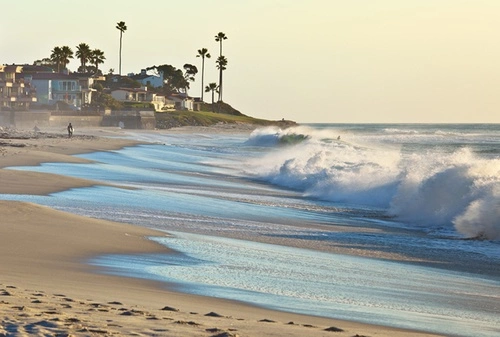
In the past, the Coastal Commission has taken a very negative view on any limitations of public beach access. In fact, one can say that the Commission has been downright aggressive in pursuing what it perceived to be limitations on public access. In 2014, the California Legislature effectively weaponized the Commission, passing legislation that authorized the Commission to impose administrative penalties on anyone they concluded to be in violation of a public access provision. (See Pub. Resources Code, § 30821.) Previously, the Commission needed to make a finding of unpermitted ...
There is no question that the COVID-19 pandemic has significantly disrupted business operations in virtually every business sector, and the water industry is no exception. We are mindful of how strenuous it is for our clients to navigate these turbulent times as they continue to provide critical services to our communities and adapt quickly to new emergency orders.
We have received a number of questions and concerns from clients on how the current pandemic affects the water industry, and what to expect going forward. We will be hosting a webinar on April 16, 2020 from 1:00 to 2:00 p.m. PT to address some of the latest updates on these issues and to help answer questions. Please click here to register.
In the meantime, the following summarizes some of the key issues facing water industry professionals, which we will address also in more detail during the webinar ...

On March 26, 2020, EPA announced a temporary enforcement discretion policy to excuse violations of environmental laws in specified circumstances during the coronavirus pandemic. EPA has stated that as of Friday, April 3, it has not issued any waivers for "essential critical infrastructure" that cannot comply with environmental enforcement during the novel coronavirus pandemic. More information on what could be considered “critical infrastructure” during the pandemic is available here. Nossaman continues to follow developments regarding EPA’s ...

On March 12, 2020, Jeffrey Bossert Clark, the Assistant Attorney General in charge of the Environment & Natural Resources Division of the U.S. Department of Justice (“DOJ-ENRD”) issued a policy memorandum formally ending the use of Supplemental Environmental Projects (“SEPs”) in civil settlement agreements negotiated by DOJ-ENRD. SEPs are an enforcement mechanism that have been used by EPA and DOJ-ENRD to allow settling parties to agree to perform environmentally beneficial projects in exchange for lowered or even waived monetary penalties. Typically, SEPs are ...
The California State Water Resources Control Board (“State Water Board”) recently issued a draft Definition of Microplastics in Drinking Water and an accompanying staff report. The State Water Board will host a video/teleconference workshop on the draft definition on April 7, 2020 and written comments will be accepted until April 24, 2020. Here is the draft definition ...
In response to the outbreak of COVID-19, we are closely monitoring guidance issued by local, state and federal authorities, as well as information distributed by the Centers for Disease Control and Prevention and the World Health Organization. We are dedicated to helping clients address business disruptions, anticipate potential challenges and mitigate risk associated with irregular operations. We are available to assist in a number of core areas that may impact public agencies and businesses in this rapidly changing environment. Please visit our COVID-19 Response Team page to read our ongoing coverage of these issues as they evolve ...
Recently, Lyn Clancy, Managing Associate General Counsel and Senior Policy Advisor for the Lower Colorado River Authority, and I presented on the topic of Endangered Species and Water Supply at the State Bar of Texas’ Changing Face of Water Law Conference in San Antonio. Issues of water supply and delivery continue to be a hot topic nationwide, including in Texas, and supply and delivery projects often intersect with the need to address species of plants and wildlife listed under the federal Endangered Species Act (ESA).
The presentation included several primary takeaways ...

World Water Day is an annual United Nations international observance day that highlights the importance of freshwater. The U.N. chooses a theme for the day each year, and for 2020 the theme is “Water and Climate Change." The goal of World Water Day is to inspire people around the world to learn more about water-related issues and to take action to make a difference. In 2020, in response to the COVID-19 pandemic, there was an additional focus on hand washing and hygiene. World Water Day is celebrated around the world through political, artistic, and educational events, as well as ...

On March 17, 2020, Governor Newsom issued Executive Order N-29-20 (amending Executive Order N-25-20 in part), which allows local or state legislative bodies to hold meetings via teleconference and to make meetings accessible electronically without violating the open meeting laws found in the Bagley-Keene Act or the Brown Act.
The new Order states ...

Nossaman Partners John Erskine and Ben Rubin recently presented at the International Right of Way Association (IRWA) Chapter 1’s 28th Annual Valuation Seminar in Montebello, CA, where they provided a presentation entitled “Rising Sea Levels - Financial Liability Issues to Cities & Legal Issues.” Sea level rise is a critical issue facing public agencies and property owners throughout the U.S. In California alone, this phenomenon could impact thousands of residences and businesses, dozens of wastewater treatment plants and power plants, 250 miles of highway, 1,500 miles ...
Today, in light of public health concerns due to COVID-19, Governor Newsom issued an Executive Order suspending certain Brown Act rules. Among other items, the Order allows local and state legislative bodies to hold public meetings via teleconference and to make meetings accessible electronically.
The Order provides: “All requirements in both the Bagley-Keene Act and the Brown Act expressly or impliedly requiring the physical presence of members, the clerk or other personnel of the body, or of the public as a condition of participation in a quorum for a public meeting are hereby ...
Yesterday, the Environmental Protection Agency (EPA) released guidance on the coronavirus and the U.S. drinking and wastewater systems. According to the EPA, “Based on current evidence, the risk to water supplies is low. Americans can continue to use and drink water from their tap as usual.” The EPA also continues coordinating with federal partners ...

Paul Weiland recently participated in the 2020 California Water Law Symposium, held at San Francisco's Golden Gate University School of Law. The theme of this year's Symposium was "Federalism & Water: Shifts in State/Federal Roles and Relations." Paul's panel, organized by Stanford University, was entitled "Promises and Challenges of Western Dam Removals: Lessons from the Lower Klamath Project.” The proposed Lower Klamath Project involves the planned removal of four dams on the Klamath River. The panelists explored the federal, state, local, tribal, industry and civil ...
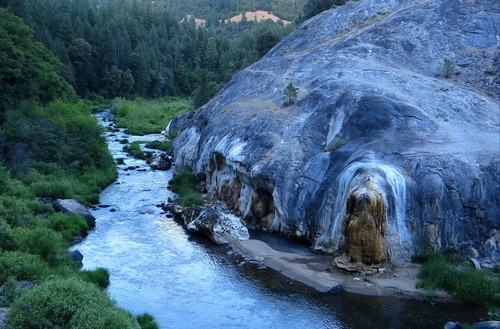
The State of California recently sent a 60-day notice of intent to sue to the Secretaries of Commerce and the Interior and concurrently filed a lawsuit in the U.S. District Court for the Northern District of California challenging the biological opinions and associated environmental impact statement (EIS) for operation of the Central Valley Project and State Water Project (collectively, the “Projects”). The Projects provide water to more than 25 million water users in northern, central, and southern California, and are one of the primary sources of water for wholesale water ...
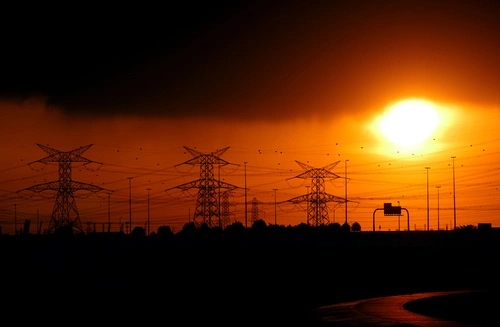
Nossaman Partner Lori Anne Dolqueist and Associate Willis Hon recently presented Nossaman’s Q1 Water Webinar to kick off our 2020 series. The complimentary 60-minute webinar covered the latest developments in California regarding electrical service and wildfire risk as they are relevant for water providers. Lori and Willis discussed recent Public Safety Power Shutoff (PSPS) events impacting water providers throughout the State, as well as coordination with electrical service providers, permitting requirements for backup generation, and public communications to ...
On February 6, 2020, the California State Water Resources Control Board lowered the response levels (RLs) for perflourooctanoic acid (PFOA) and perfluorooctanesulfonic acid (PFOS), two of the most common compounds in the family of chemicals known as per- and poly-fluoroalkyl substances (PFAS). The new RLs are set at 10 parts per trillion (ppt) for PFOA and 40 ppt for PFOS, down from the previous RL of 70 ppt for the combined concentration of the two compounds.
This Board action follows the new regulatory requirements in California for PFAS that became effective on January 1, 2020 ...
California Water Views provides timely and insightful updates on the water sector in the state. We relay information on how water legislation and policy from the nation’s capital, Sacramento, and around the U.S. affect California’s water utilities, agencies, practitioners, and consumers. We also write about important events, conferences, legal cases, and other key happenings involving all things water in and around California.
Stay Connected
 RSS Feed
Categories
- Artificial Intelligence
- Bonds
- California Regulation & Policy
- California Water Policy
- California Water Views 2026 Outlook
- Clean Up of Groundwater & Contaminated Media
- Clean Water Act
- Climate Change
- Climate Change Adaptation
- Coastal Development
- Construction
- Courts
- COVID-19
- Dam Construction, Operation & Removal
- Desalination
- Drinking Water Quality & Safety
- Environmental Compliance
- Environmental Law
- Environmental Protection Agency
- Events
- Government Administration
- Government Funding
- Groundwater Management & SGMA
- Infrastructure & Capital Planning
- Infrastructure Development
- Inverse Condemnation & Regulatory Takings
- Legislative Updates
- New Legislation
- Oceans, Marine Life & Maritime Transportation
- Permitting and Project Development
- Project Construction
- Projects
- Public Agency Regulation
- Public Policy
- Recycled Water
- Regulatory Reform & Proposed Rules
- Right to Take
- State Budgets
- Sustainable Water Practices
- Valuation
- Water
- Water Affordability
- Water Infrastructure
- Water Litigation
- Water Management
- Water Quality
- Water Resources Law
- Water Rights
- Water Supply
- Water Utility Regulation
- WOTUS
